

A Pilates Team “Field Trip” to NYC
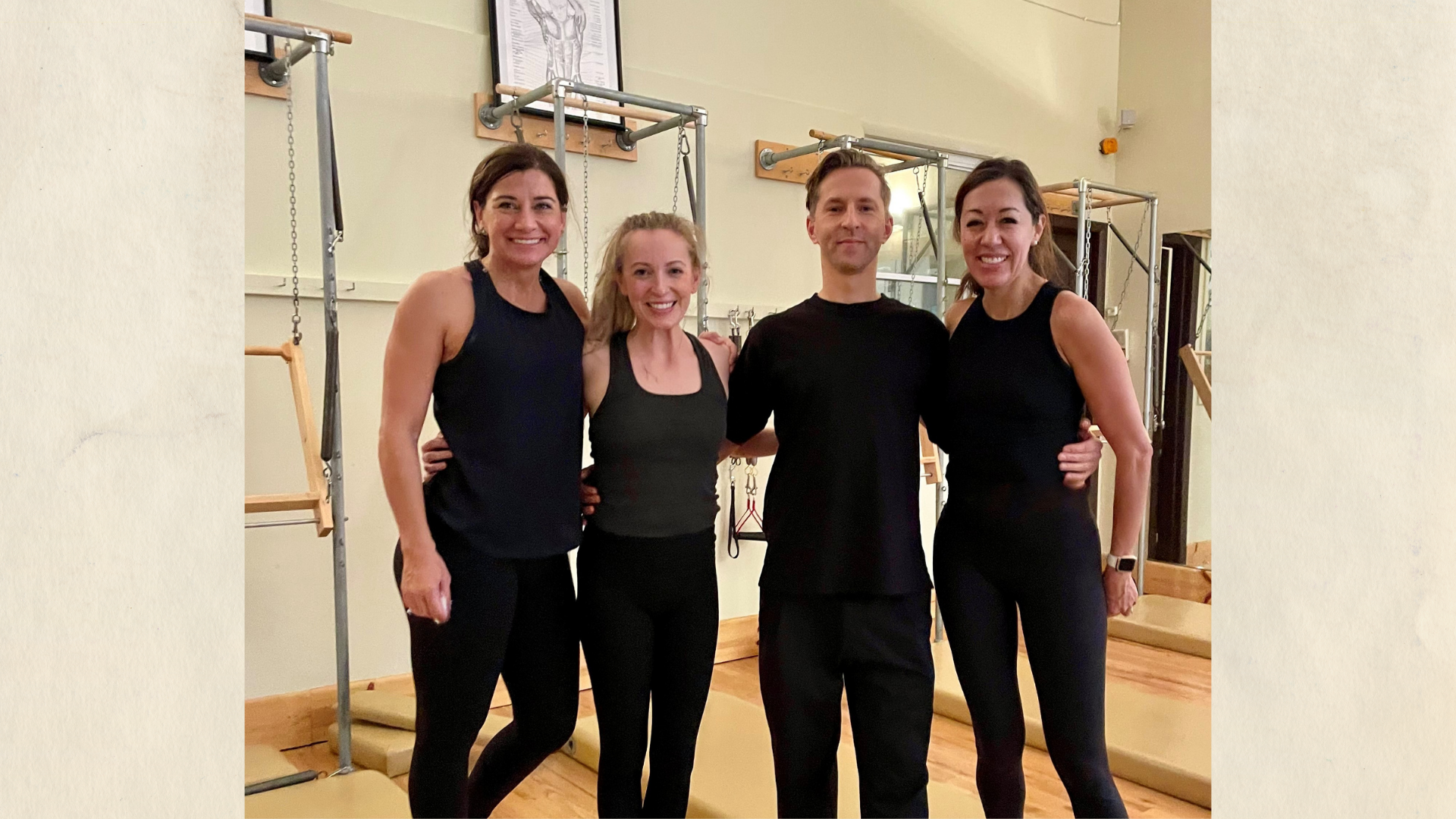
Visiting the original Joseph Pilates studio in Manhattan
It was 2011 when The Fort Worth Club Athletic Center debuted equipment Pilates classes, introducing members to a century-old format that, at the time, was mostly foreign in Fort Worth and often confused with yoga.
Fast forward 15 years and now equipment Pilates studios have popped up all over town, many purposely diverting from classical methods for trendy tricks, techniques, and anything that looks good for social media.
But at The Fort Worth Club, the Pilates program has remained consistent – intentionally adhering to principles of Joseph Pilates, the German-born trainer (1883 – 1967) for which the format is named. The principles include breathing, concentration, control, precision, centering, and flow – values that have kept members coming back to the studio year after year. (Many even have a favorite reformer.)
After teaching the format at the Club for more than decade, the full-time Pilates team – Celestina Blok, Staci Moore, and Victoria Hancock – recently took an inspirational retreat to Pilates mecca: New York City. It’s where Joseph Pilates opened his first studio in 1928.
Nice & Tall
On the second floor of an older building at 939 8th Ave. in Manhattan sits an industrial space where Pilates instructor Konstantin Tulinov and his team welcome visitors from all over the world. The proof is in the signatures that cover the walls by the front door, where guests write where they’re from along with notes of thanks.
The studio is called Nice & Tall: The Original Joseph Pilates Studio. Joseph Pilates once used the space to teach dancers, performers, athletes, and colleagues a method he called “Contrology.” The format became widely known as “Pilates” after Pilates passed in 1967.
Also on the walls are framed black-and-white photographs of Pilates himself practicing on a reformer – an apparatus he invented out of mattress springs and a bed frame. He was often bed-ridden as a child, having suffered from a bone-weakening disease called rickets. The “sliding bed” provided a means for exercise to those who were bedridden like him. Today the reformer comes in many forms, but all are based on Pilates’ original model.
Blok, Moore, and Hancock took multiple classes at Nice & Tall during their short stint in New York last fall and came back completely reinspired.
“I always have room to learn,” says Moore. “Although I have been teaching Pilates for decades, it was an opportunity to be reminded and reflect on the purpose of the practice. We can easily settle into our habits or ways of doing things. The opportunity to take classes with top notch instructors in the original studio was humbling, but also a chance to reconnect with the original purpose of Pilates.”
Hancock, who studied ballet at TCU before becoming certified in Pilates, says it was neat to see where Pilates was first taught.
“It’s interesting to think we are still doing similar exercises and movements so many years later,” she says.
Having taught multiple forms of group fitness for more than 20 years, Blok says equipment Pilates is a format that can be done for life by anyone of any age and any fitness level. The trip to Nice & Tall only solidified that sentiment.
“There are now countless professional athletes who have adopted equipment Pilates as their main method of training,” she says. “Visiting the studio in New York showed me just how challenging and beneficial equipment Pilates can be, while still being approachable.”
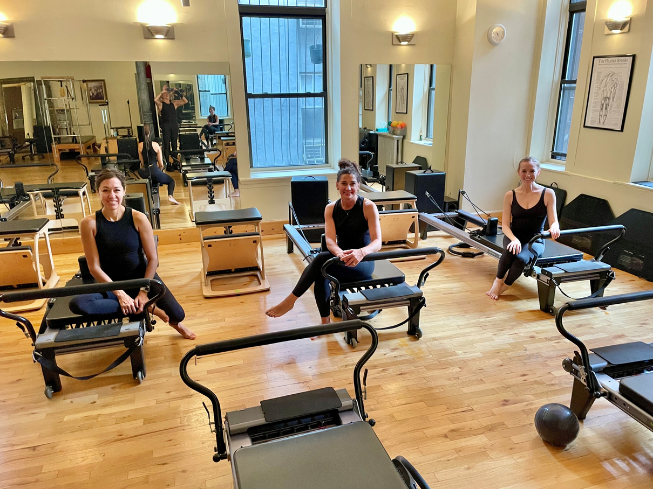
More than Muscle Training
As founder of Nice & Tall, Tulinov is passionate about sharing the benefits of Pilates globally.
“The classic Pilates method is more than a muscle training exercise system,” he says. “It’s a scientifically proven movement and lifestyle philosophy.”
He added that in traditional Pilates, all exercises are arranged in a specific order to support all physical processes in the body in the best way. The Fort Worth Club instructors might occasionally divert slightly from the traditional order – but always stick to the format’s classic approach.
“I think some studios have lost touch of the purpose of the classical style by incorporating props and movements that are not original to the practice,” says Moore. “I have seen many practices forget that being in control of your movements is key in Pilates. In my opinion, it’s one of the hardest things to train your body to do. Moving with control, concentration, and precision is challenging. It’s my favorite part of Pilates and why I think it is so effective.”
Hancock agrees.
“Classical Pilates doesn’t focus on tricks on the reformer but rather functional exercises that can help people to live their optimal life,” she says.
Starting a Pilates Journey
Some members have been taking equipment Pilates classes at The Fort Worth Club since day one 15 years ago. Others have taken classes elsewhere but have transitioned exclusively to the Club. There are also many members new to Pilates, and each must take at least two one-on-one orientation sessions before joining a group class.
“It gives members a chance to understand why the details of Pilates are so important,” says Moore. “One breath or one tiny correction can change the exercise effectiveness entirely. Working one on one with an instructor is a great way to make Pilates more effective.”
With the popularity of Pilates on the continual rise, the Club recently added a mat Pilates class to the group fitness schedule. The complimentary class (Thursdays at 11 a.m.) allows for a stripped-down version of the format using only a mat. The principles remain the same, and many of the moves are similar to those on the reformer. Both versions are challenging in different ways.
The Fort Worth Club’s Pilates program remains consistent and strong – just like the method itself.
Interested in learning more about equipment Pilates? Contact Staci Moore, Fitness Manager, at smoore@fortworthclub.com.
